
Classified Balance Sheet: Definition, Components & Examples
For instance, if there is a large shareholder loan on the books, it could mean the company can’t fund its operations with profits and it can’t qualify for a commercial loan. The other assets section includes resources that don’t fit into the other two categories like intangible assets. Know the definitions of the common assets, liabilities, and owner’s equity accounts and understand what each represents.
Common Mistakes and Pitfalls
The main advantage of this detailed classification is that it offers stakeholders a more nuanced view of a company’s financial condition. A consolidated balance sheet integrates the financial information of a parent company and its subsidiaries into one document, reflecting the group’s overall financial position. An unclassified balance sheet is typically used by a small business with few different accounts. Each major section contains a single list of accounts in the same order as a classified balance sheet but without the subsections. For instance, the assets section shows cash first, followed by the remaining assets. The liabilities section typically lists accounts payable then the other liabilities.
Best Financial Reporting Software Solutions
- Analyzing this document involves understanding the significance of each section and drawing conclusions about the company’s performance and future prospects.
- Non-current assets, on the other hand, are like the furniture in your living room or your car—they’re long-term investments that provide value over several years.
- It groups or ‘classifies’ assets, liabilities, and equity into several subcategories, making it easier for stakeholders to analyze and interpret the data.
- These standards and requirements bring uniformity, consistency, and transparency to the complex world of financial reporting.
- Whichever the case – a correct balance sheet is a must, and what can help you in maintaining accuracy are tools like Farseer.
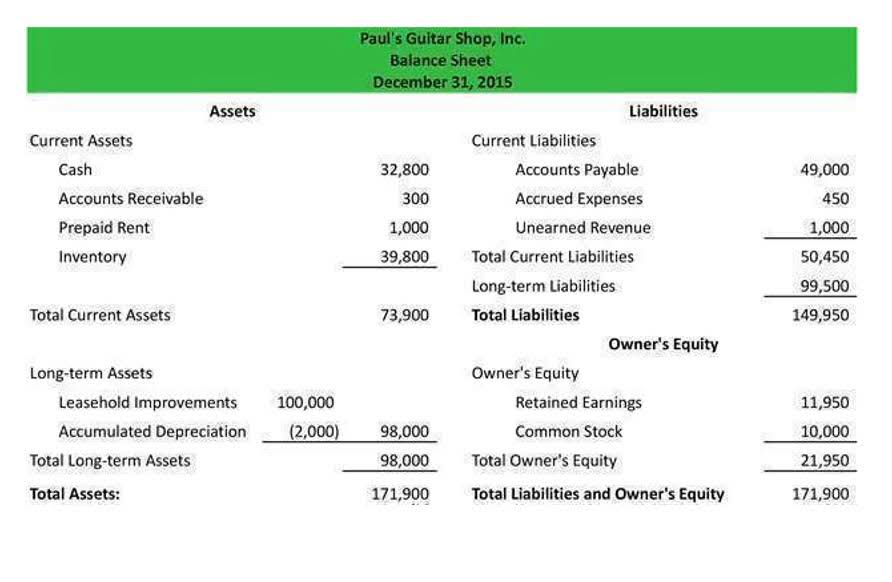
- In addition, by breaking down the component of a company’s Balance Sheet, a classified balance sheet example can provide insights into which areas may be strengths or weaknesses for the company.
Information regarding their details can either be provided by wider categories or it can be presented by subcategories to show classification of its basic elements. The classification of assets, liabilities, and equity in a balance sheet is not merely a matter of accounting convention; it https://www.bookstime.com/ serves as a vital tool for analyzing a company’s financial position and operational health. This detailed categorization is instrumental for investors, creditors, and management to evaluate the company’s overall financial strategy and operational effectiveness. Traditional balance sheets don’t make particular categorization between various sections, it only has sections for a company’s assets and liabilities.
Securing Funding or Assessing M&A Prospects – The Global Perspective
By allowing users to quickly see how much debt a company has relative to its assets, for example, a classified balance sheet can help flag potential financial risks. In short, the aim of the classified balance sheet is to give investors and creditors more useful information about the company. Current liabilities are any debts that become due in the next classified balance sheet year or accounting period.

He has a wealth of experience, having worked in various roles for over 15 years. Mr. Abbasi is proficient in the field of business management and is also a professional blogger. The classified balance sheet is a linchpin in modern business strategy and planning, from securing funding to planning mergers and acquisitions. Although both companies have good liquidity, Company A has a higher current ratio, suggesting better short-term liquidity.

Case Study: Analysis of a Real Company’s Classified Balance Sheet
- My Accounting Course is a world-class educational resource developed by experts to simplify accounting, finance, & investment analysis topics, so students and professionals can learn and propel their careers.
- The difference between current assets and current liabilities reveals working capital levels, while trends in individual components highlight operational efficiency opportunities.
- For example, a tech company may have a significant portion of intangible assets like patents and software.
- Shareholder equity should also be broken down into its respective subcategories—such as retained earnings, net income, and share capital—before determining the total amount.
But if there’s a lot of long-term debt, it could be a warning sign that the company owes too much money. Throughout this series on financial statements, you can download the Excel template below for free to see how Bob’s Donut Shoppe uses financial statements to evaluate the performance of his business. Business liabilities may break the company’s debts into three Suspense Account main subcategories. For example, a tech company may have a significant portion of intangible assets like patents and software. In contrast, a manufacturing company might have a more extensive inventory and more substantial tangible assets like machinery.
- So, the next time you come across a classified balance sheet, you won’t just skim through it.
- Here’s what you need to know about a classified balance sheet, including how it differs from a balance sheet, its pros and cons, and what formula to use.
- By leveraging intelligent reporting tools, we help businesses maintain classified balance sheets with ease, offering a range of services like financial analysis, audit preparation, and more.
- Let’s look at an example classified balance sheet format for a hypothetical company, “XYZ Corporation.”
- By choosing the right type of balance sheet, you can ensure better financial management and decision-making.
What is not reported on a classified balance sheet?
While the debt may have lower payments, it remains a risk if market conditions change or an economic downturn occurs before repayment. The most effective finance organizations embed classification discipline into daily transaction processing, monthly close procedures, and quarterly review cycles. Finance leaders use these insights to negotiate better supplier terms, implement collection process improvements, and optimize inventory management policies. Well, the power lies in how strategic organization creates clarity from complexity, turning numbers into narratives that guide critical business decisions. The accounts are scattered, classifications are inconsistent, and extracting meaningful insights requires detective work. Classification plays a pivotal role in the computation and interpretation of key financial ratios, which are essential tools in financial analysis.